Context gets lost between people
One shift inherits another shift’s setup. One department receives a record without the reasoning behind it. The next person has to reconstruct what happened.

Fieldwork-led AI for frontline operations
Aiwanfo helps operations teams turn one real workflow problem into a private, auditable AI system. We work alongside frontline teams to map the paperwork, handoffs, exceptions, and judgement involved, then validate what should improve before choosing the technology.
The plan is not the operation
Most systems are designed around what should happen. Frontline teams work through what actually happens. That gap is where time, context, and trust disappear.
One shift inherits another shift’s setup. One department receives a record without the reasoning behind it. The next person has to reconstruct what happened.
Short picks, unclear documents, missing approvals, unusual cases, and temporary workarounds are handled through memory, paper, messages, and judgement.
Forms are completed, scanned, and stored, but cannot be searched, compared, or used to identify patterns.
Software and equipment may be capable but still fail because they were not designed around the people, incentives, constraints, and edge cases inside the operation.

Fieldwork first. Software second.
We do not begin with a chatbot, dashboard, robot, or predetermined product. We begin with one workflow and the people responsible for making it work.
We spend time where the work happens and understand the systems, documents, equipment, decisions, and people involved.
We document the standard path, exceptions, handoffs, workarounds, and where people are filling the gaps.
We identify the narrowest useful intervention and say when AI would create more trouble than it solves.
We design the agreed system around approved information, clear permissions, human review, logging, security, ownership, and training.
What we build
These are examples, not off-the-shelf promises. We determine what fits only after understanding your workflow.
Preserve the context that disappears between shifts, departments, systems, and locations.
Examples: Shift briefs, unresolved issues, operational timelines, exception routing.
Turn forms, scanned records, notes, and operational documents into searchable, reviewable information.
Examples: Document processing, evidence extraction, source-linked summaries.
Help frontline teams respond when the standard workflow breaks.
Examples: Missing inventory, unusual cases, blocked processes, low-confidence documents.
Use cameras and operational data together to identify visible mistakes and route uncertain cases to people.
Examples: Packing checks, pallet condition, label visibility, setup validation.
Give authorized teams a secure way to ask questions across their own procedures, records, and operational knowledge.
Examples: Document answers, process guidance, policy retrieval, source-backed search.
Where we work
Picking, replenishment, pallet building, loading, inventory, shift handoffs, and the exceptions that follow an order to the customer.
Packing verification, line setup, quality checks, product handoffs, labeling, and the small mistakes that can travel through an entire production run.
Document-heavy processes, equipment workflows, quality evidence, internal handoffs, and practical automation around existing systems.
Administrative intake, paper-to-digital workflows, staff handoffs, observation records, and operational information that must remain private, auditable, and human-reviewed.
Built from inside the work
Aiwanfo’s approach was shaped through direct work inside food production, warehouse distribution, inventory operations, delivery routes, and hospital units.
The people closest to the work understand the exceptions. The systems around them rarely preserve that knowledge.
Read the field notes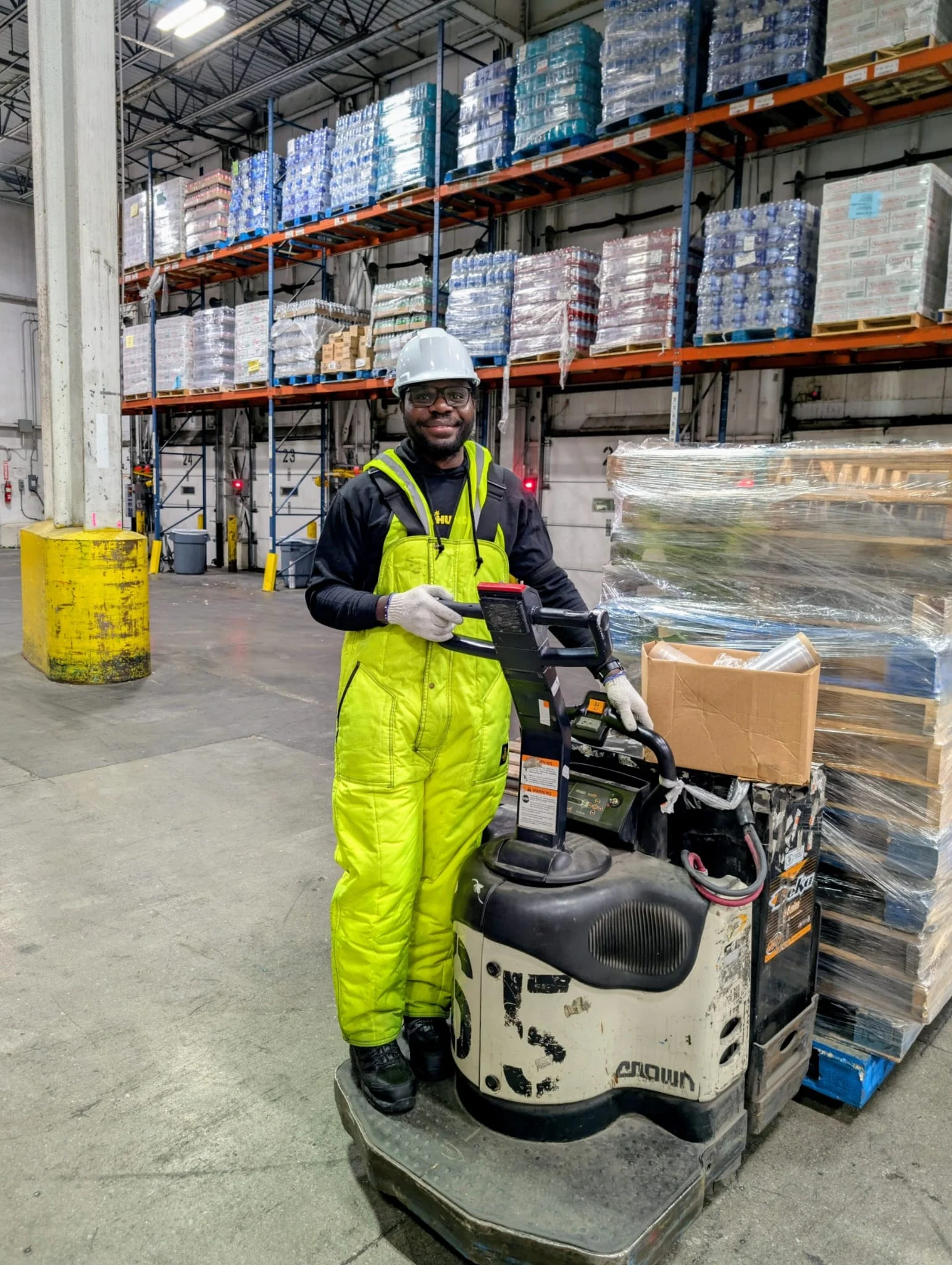
Direct experience inside frontline operations
Certified on warehouse material-handling equipment
Technical background in software and applied AI
Worker-first approach to automation
Customers retain their code, data, and systems
The rules we build by
We learn the process before choosing the technology.
The real opportunity is understanding what happens when reality diverges from the documented workflow.
Sensitive, uncertain, or consequential decisions remain visible and reviewable.
The system should show what it did, why it did it, and which source informed the result.
We build around existing systems, equipment, documents, and teams wherever practical.
You retain the code, data, models, documentation, and training required to operate the system.
Start with one workflow
You receive a workflow map, the questions that must be validated, and a plan for the narrowest responsible next step. That may be AI, conventional software, process change, training, or no new technology.
What should happen
What actually happens
Where exceptions appear
What information gets lost
What people do to compensate
What must be validated
Which controls and approvals are required
Practical questions
No. We begin with the customer’s operation and build around the workflow. Similar patterns may appear across companies, but the people, systems, constraints, and exceptions are rarely identical.
Usually not. The opportunity is often the work between existing systems: documents, handoffs, approvals, exceptions, and information people currently carry manually.
We will say so. The right intervention may be a process change, additional training, better use of existing equipment, conventional software, or no new technology.
Depending on the project, systems can run in the cloud, on a private network, or on infrastructure controlled by the customer.
The goal is to reduce preventable mistakes, repetitive handling, and lost context. We design around human oversight and the judgement workers already contribute.
The customer retains the agreed code, data, models, documentation, and training. Ongoing work with Aiwanfo should be a choice, not a dependency.
We can work with many providers and technology stacks, but we choose them after understanding the workflow. The right approach depends on what the system must do, what it may access, where it will run, and your requirements for privacy, control, reliability, and ownership.
Show us the real work
We will help you understand where it breaks, what your team does to keep it moving, and whether an AI agent or application is worth building.